
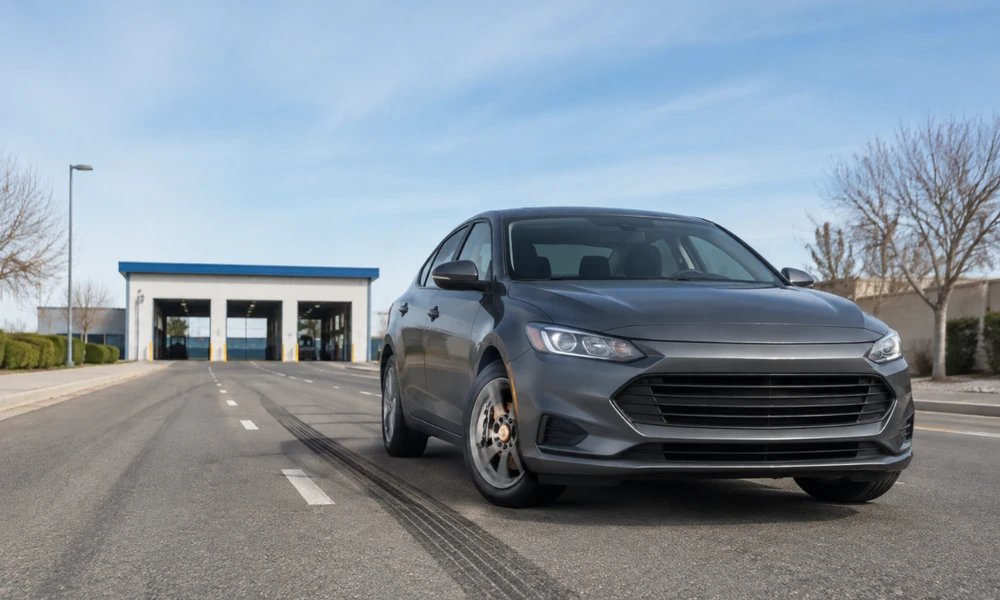
A vehicle should remain reasonably straight when the brakes are applied on a level road. If the steering wheel turns or the car moves toward one side, the braking force or tire grip may be uneven. This behavior can make emergency stops difficult and may indicate a problem that requires prompt inspection.
Several brake, tire, steering, and suspension conditions can cause pulling. Identifying the source requires examining the complete system rather than replacing parts based on the direction of the pull alone.
A Sticking or Seized Brake Caliper
Brake calipers press the pads against the rotors to slow the vehicle. If a caliper piston or slide pin becomes stuck, one wheel may not produce the same braking force as the wheel on the opposite side.
A caliper that does not apply properly can cause the vehicle to pull toward the side with stronger braking. A caliper that remains partially applied may create heat, rapid pad wear, a burning smell, or pulling even after the brake pedal is released.
Because caliper behavior can vary, the direction of the pull does not provide a complete diagnosis.
Uneven Brake Pad or Rotor Condition
Brake pads should generally wear at a similar rate across each axle. Uneven wear may result from seized hardware, incorrect installation, contamination, or restricted caliper movement.
Rotor problems can also affect braking balance. Heavy rust, surface damage, excessive thickness variation, or contamination may reduce consistent contact between the pad and rotor. If oil, grease, or brake fluid reaches a friction surface, braking on that wheel may become less effective.
A technician will normally compare pad thickness, rotor condition, and operating temperatures on both sides.
Problems With Brake Hoses or Hydraulic Pressure
Flexible brake hoses carry hydraulic pressure to the calipers. An internally damaged hose may restrict fluid flow even when the exterior looks normal. Depending on the failure, pressure may reach the caliper slowly or fail to release correctly.
Air in a brake circuit, a fluid leak, or another hydraulic fault can also produce uneven braking. Warning signs may include a soft pedal, increased stopping distance, visible fluid, or a brake warning light. These symptoms should be treated seriously.
Tire Pressure and Tire Condition
Not every braking pull begins with the brakes. A tire with low pressure creates more rolling resistance and can cause the car to drift. Differences in tread depth, construction, damage, or grip may become more noticeable as the vehicle’s weight shifts forward during braking.
Check tire pressures when the tires are cold and compare them with the vehicle’s specified values. Inspect the tread for uneven wear, bulges, cuts, or embedded objects. Tires should also be appropriate for the vehicle and matched according to relevant fitment recommendations.
Alignment, Steering, and Suspension Issues
Worn suspension or steering components can allow a wheel to change position when braking force is applied. Damaged control arm bushings, ball joints, tie-rod ends, wheel bearings, or strut mounts may contribute to movement or instability.
Incorrect wheel alignment can cause a vehicle to drift during normal driving and may make the effect feel stronger during braking. A pull that appears only while braking is more likely to involve brake force or load-sensitive movement, but the systems should be evaluated together.
Road slope can create a mild drift, so observations from one road are not conclusive.
When to Stop Driving
A strong or sudden pull should not be ignored. Stop driving and arrange an inspection if the vehicle is difficult to control, the pedal feels unusually soft, a warning light appears, brake fluid is leaking, smoke is visible, or one wheel smells extremely hot. Do not touch a suspected overheated wheel or brake assembly.
How the Problem Is Diagnosed
A proper inspection may include a road test when safe, tire-pressure checks, wheel and tire evaluation, brake measurement, hydraulic testing, and examination of steering and suspension parts. The underlying cause should be corrected before an alignment is performed or new brake parts are installed unnecessarily.
A car that pulls during braking is giving an important warning. Prompt diagnosis can restore balanced stopping, prevent additional wear, and help maintain safe control in both routine and emergency situations.
This post was written by a professional at Tires2Go Florida. Tires2Go Florida is a trusted automotive service center located in Pinellas Park, Florida, serving drivers across St. Petersburg, Tampa, Clearwater, and Largo. Our certified mechanics handle auto repair St Petersburg FL, tire and wheel replacement, brake service, suspension repairs, oil changes, wheel alignments, tire balancing, and road force balancing. We also specialize in ADAS calibration, suspension modifications, lift kits, and lowering kits using quality parts and modern diagnostic equipment. From routine maintenance to advanced automotive services, Tires2Go Florida provides dependable solutions and tires for sale for vehicles throughout the Tampa Bay area.
